Saturday, 29 December 2012

Liverpool Care Pathway - The Final Countdown

In Ray Bradbury's surreal world, the firemen came to set fire to your books.

In our surreal world, the hospitals give you infections and the doctors fight to end your life!

This is the 21st century? This is the 21st century! Here is May James whose story, reported in Mail Online, follows below:
"This is one of the terrible things. Aside from the pneumonia, we’ve never really had a diagnosis. All we know is that from the moment he went into hospital, he went catastrophically downhill."
Would it be improper to suggest the doctors might want to bury their mistake(s)?


They've sentenced Dad to death: Family's fury after hospital wins legal battle to let grandfather, 69, die if illness deteriorates
  • David James, 69, contracted pneumonia during a hospital visit and has been bedridden since
  • His wife May and daughter Julie lost landmark High Court battle last week
  • Local hospital have been allowed to put the retired musician on the Liverpool Care Pathway if his health deteriorates
| 
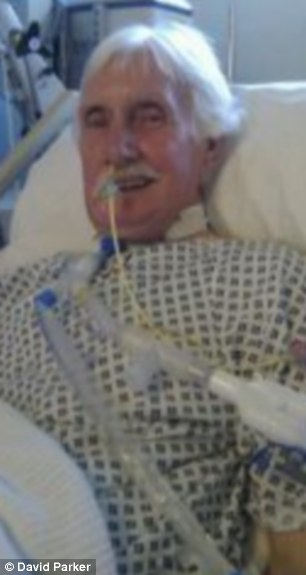
'Smashing': David James's standard comment on his health may not last long
Last night, as she has done every night for the past eight months, May James visited her husband in hospital and asked him how he was.

Despite the fact he breathes via a ventilator and, since undergoing a tracheotomy (the surgical opening of an airway in the neck), can speak only in a whisper or mouth the words, his response was typically cheery. 
‘Smashing,’ he said. Poignant enough, you may think.

But recently David’s determined positivity has taken on a particularly heartbreaking resonance, given that his family — May, his wife of 50 years, and their children Julie, 48, David, 45, and Paul, 37 — believe he may have just days to live. 

For three days before Christmas, the hospital trust treating the retired musician won a landmark legal case that ruled they could withhold treatment if his condition deteriorates.

His family, who have fought the hospital in the courts every step of the way, believe David has been handed a barbaric death sentence. ‘It’s legalised murder,’ says Julie, a civil servant.

‘It’s heartbreaking for us after everything we’ve been through and we feel bullied.
‘We don’t trust the hospital at all now,’ she adds. ‘But we’re going to keep fighting and we won’t let them win.’
Their problems began in May, when David James walked into his local hospital with nothing more than suspected constipation.

Within three weeks, he was on a ventilator with hospital-acquired pneumonia and sepsis (blood poisoning), which ultimately required a tracheotomy to enable the ventilator to help him breathe.

In the summer, the hospital trust — which cannot be named for legal reasons — launched a rare legal action seeking permission to withdraw potentially life-saving treatment from the 68-year-old grandfather, arguing that the suffering it would cause would outweigh the tiny chance of recovery.

    It is one of the few times that a hospital has taken a family to court: but in this instance they perhaps reckoned without the passion of the James clan.

    Appalled by the hospital’s attitude, they launched a fightback, gathering evidence showing that David still enjoyed his life.

    In emotional testimony in court, they painted a moving portrait of a loving husband and father who enjoys the company of his grandchildren, likes listening to music and even jokes with visiting friends. This man, they said, is not ready to die — and they were not ready to let him go.

    Their crusade appeared to end in victory when a judge rejected the hospital trust’s application, ruling that it had undervalued the limited quality of life David could still enjoy.
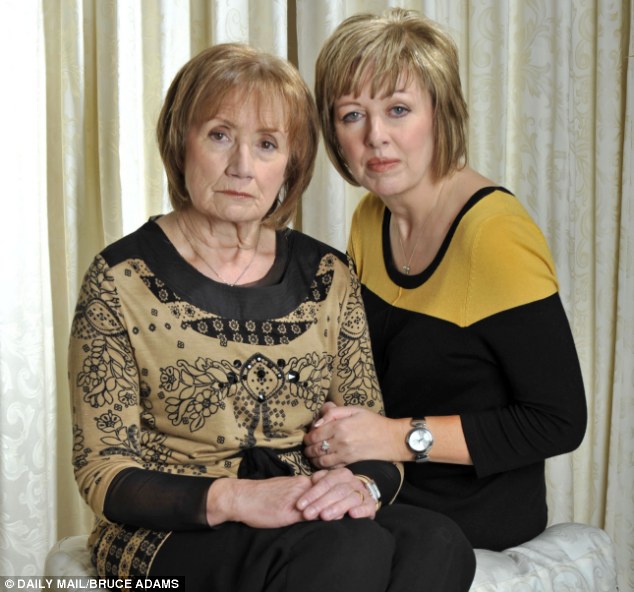
    Family fight: David's wife May with daughter Julie James say they will not give up hope and will keep fighting for their husband and father not to be put on the care pathway
    Family fight: David's wife May with daughter Julie James say they will not give up hope 
    and will keep fighting for their husband and father not to be put on the care pathway

    The judgment seemed to mark not just a personal victory for the James family but also one with wider significance.

    In future, hospitals would be forced to pay greater attention to the wishes of families who want efforts to save seriously ill loved ones to continue, even against medical advice.
    Not any more. Just before Christmas, the hospital trust went back to court to appeal against the decision — and this time it won.

    Appeal Court judges backed the doctors, ruling that treatment could be withheld if David deteriorated.

    It was, Lord Justice Ward said, a ‘sad and harsh’ decision, and one that he and his colleagues had agonised over.

    But he added: ‘We’re quite satisfied that this is a very sad case indeed — where if it’s necessary, and in the clinical judgment of the hospital it’s no longer in the interests of [David James] to engage in this difficult treatment, then the hospital are permitted to refrain from administering it.’

    Adding that he was ‘hugely impressed’ with the professionalism of the hospital staff involved in the case, he spoke of his hope that they and the James family should work together towards David’s best interests.

    Not surprisingly, the family are devastated, having gone from hope to despair in the space of a few weeks.  

    ‘As far as I’m concerned, the hospital feel David has overstayed his welcome,’ says May, with tears in her eyes. ‘To them, he is a patient; but to me and his children, he is still a loving husband and father, and while he is enjoying his life who are they to say that it should end?
    ‘We all know he’ll never be the man he was when he walked into that hospital. But he’s still David.

    ‘If he was in pain, unhappy or wasn’t responding and was unconscious, we would feel differently. But how can we give our consent to a hospital withdrawing potentially life-saving treatment to a man who was sitting in bed reading a newspaper just the other week, and who delights in seeing his family and friends?’

    The family have, at least, been reassured by the trust’s medical director there will not be any immediate change to David’s treatment.
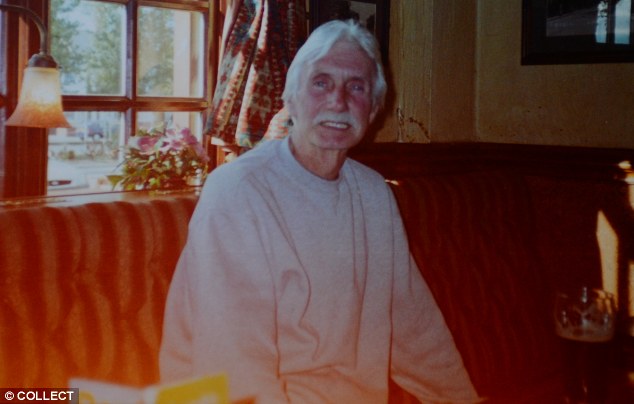
    Before visiting hospital: David James pictured at home in Easter this year before he contracted pneumonia in hospital
    Before visiting hospital: David James pictured at home in Easter this year before he 
    contracted pneumonia in hospital

    Nonetheless, the latest ruling further illustrates the furore surrounding the Liverpool Care Pathway (LCP) — the controversial palliative care system that some relatives have argued is a way for medical staff to kill off the terminally ill and the old.

    While the hospital in this case vehemently denied invoking it — a denial accepted in court — the family remain adamant in their belief that David was secretly placed on the Pathway. It is another reason, Julie says, that they feel so passionately.

    ‘When I stood in the witness box in court, I wasn’t just speaking up for Dad, but for all the other families around the country going through a similar trauma,’ says Julie.

    ‘We said no to what the hospital wanted, but other families feel pressurised into saying yes.’

    The family’s bewilderment is understandable, for theirs is an ordinary family that has found itself in extraordinary circumstances.

    Since David underwent the tracheotomy, his family have been told countless times he has just hours to live, only for him to rally.

    Bafflingly, the hospital doctors are at a loss to explain exactly what is wrong with him.

    ‘We never really understood what happened to him, and we still don’t,’ says May.

    ‘This is one of the terrible things. Aside from the pneumonia, we’ve never really had a diagnosis. All we know is that from the moment he went into hospital, he went catastrophically downhill.’

    May’s devotion to her husband is plain to see. Childhood sweethearts, she and David married at 17 and 18 respectively and have rarely exchanged a cross word.

    David was a professional musician who has enjoyed modest success over the years.

    He played on the 1974 hit Who Do You Think You Are by Candlewick Green, and alongside well-known names, from Shirley Bassey to The Beatles.

    Yet family always came first, his wife insists.

    ‘David has such a lovely personality,’ she says.

    ‘He just was, and is, a very genuine person. We were always happy. We just enjoyed our life together.’

    Then, 11 years ago, David was diagnosed with bowel cancer and given six months to live. Yet after chemotherapy and radio- therapy, followed by surgery, he made a full recovery.

    ‘It was a miracle really,’ says May. ‘He was really very ill, but he pulled through. He said he wouldn’t be beaten — and he was right.’

    For the past 11 years, she says, he has enjoyed good health. ‘He did smoke, but he looked after himself and ate well.’
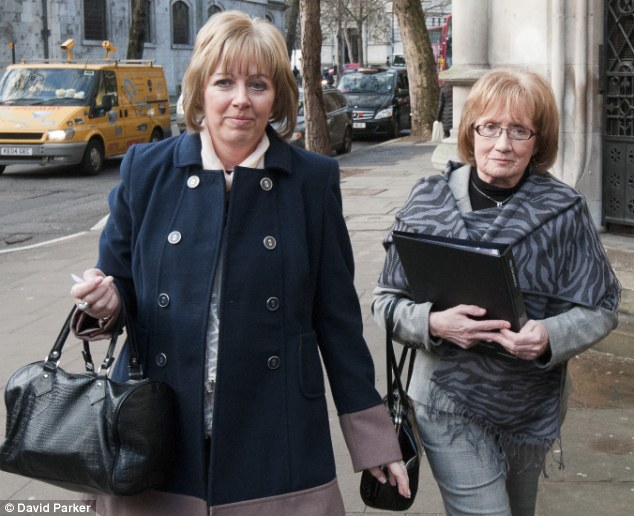
    Legal battle: May, right, Julie arriving at the High court in London ahead of the ruling which will see David put on the care pathway
    Legal battle: May, right, Julie arriving at the High Court in London last week ahead of 
    the ruling which will see David put on the care pathway

    And so when earlier this year her husband asked her to call a doctor because he was suffering abdominal pain, she was not unduly concerned.

    It was a Saturday, so the locum GP suggested they went straight to hospital, where David underwent an initial examination in A&E and then, the following morning, by a surgical team.
    They diagnosed constipation, but said they wanted a CT scan which, as it was a Bank Holiday, could not take place for a few days.

    When she returned to visit her husband the following day, May was surprised to find him receiving oxygen. ‘I asked the doctor what was going on, and he told me that David had got hospital-acquired pneumonia,’ says May. ‘I was stunned. I knew it meant he would not be leaving hospital soon.’

    She was even more stunned when, the following day, she was told by doctors that David would be discharged. ‘I pointed out that he couldn’t breathe properly, and the doctor said: “Oh, does his breathing not normally sound like that?”

    ‘I had a bad feeling, and I was right to.’

    May popped home to get David some clean clothes and returned an hour later to find the curtains drawn around his bed.

    ‘The man opposite told me that ten minutes after I had left, the crash team had been called in. My blood ran cold.’

    Finally, a nurse emerged and told May that her husband’s condition had dramatically worsened. As well as pneumonia, he had a water infection and septicaemia.

    It was to prove just the start of a complex medical nightmare. Within days, David had also contracted norovirus and by May 24 — three weeks after he had first walked into hospital — he was taken into intensive care.

    ‘It was incredibly distressing,’ says May. ‘He’d been perfectly fit and healthy less than a month before.’

    Two days after that, May arrived at the hospital to find her husband in isolation. ‘Doctors told me he had suspected TB. He wasn’t on a ventilator at that point, but he was very confused. Though when I left him a few hours later he had perked up a bit.’

    At 1am, however, she received a call telling her David’s condition had deteriorated so catastrophically he might not last the night.

    ‘They told me to gather the family. When we arrived he was a horrendous sight, like a wax dummy. They told us he was dying and we stood there holding hands and saying prayers, just waiting.’  
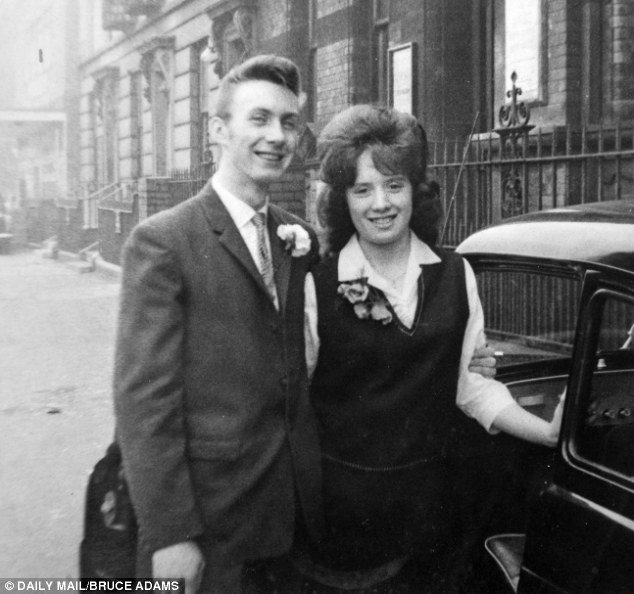
    Back in the day: David and May James on their wedding day 29th Sept. 1962 outside Liverpool Registry Office
    Back in the day: David and May James on their wedding day in Liverpool in 1962

    Yet by the morning he had rallied, and the family were sent home. When they returned, David had undergone a tracheotomy, but was sitting up in bed watching TV.

    ‘I couldn’t believe my eyes,’ says May. ‘I said: “Look at you.”

    ‘He just smiled. He seemed OK and was able to talk in whispers.’

    He wasn’t out of the woods, however, with fluctuating blood pressure and his body still riddled with sepsis whose origins, May says, the doctors could not identify.

    ‘We’d get taken into meetings with consultants, but they’d never really be able to explain what had gone wrong.’

    It was at one of these meetings, in June, that doctors raised the issue of withholding treatment.

    ‘One doctor said: “We don’t expect him to have a cardiac arrest — but if he does, we don’t want to do CPR (resuscitation) and we want you to agree to that.”

    ‘I said categorically not,’ she says. ‘They couldn’t tell me what was wrong with him, so there was no reason for us to go along with what they were saying.

    ‘At this point, their attitude changed. They’re not used to people saying no.’

    At subsequent meetings, the trust also told the family they would like to withhold two further treatments, kidney dialysis and invasive support for chronic low blood pressure.

    ‘I felt as if my dad was being murdered,’ says Julie.

    ‘Getting put to death. It was horrendous.’

    In early July, the trust called a meeting with the family to inform them that if they did not agree to their demands, they would be taking the issue to court.

    May recalls: ‘I said: “You do what you feel you’ve got to do. But you will not break me.” I would not be bullied.’

    Further hurdles were to follow. In August, David suffered a stroke followed by cardiac arrest. As the court case was still under way, the hospital had no choice but to resuscitate him.

    ‘We thought we’d lost him,’ says May. ‘Yet within 24 hours he was sitting up in bed, giving us a big smile.’

    A month later, she was able to celebrate their 50th anniversary at his bedside, reading cards from well-wishers. He spent Christmas Day surrounded by his family.

    May acknowledges that her husband’s time in hospital has taken its toll.

    Months on a ventilator have affected his lungs, while the stroke has affected some movement on his right side.

    She also understands the pressure hospital trusts are under to cut costs and save money.
    Yet she vehemently disputes the hospital’s insistence that David has undergone ‘multiple organ failure’ several times.

    ‘On more than one occasion, doctors would say to me “He’s got multi-organ failure” — but that makes it sound a lot more dramatic than it is,’ she says.

    ‘He would always recover after fluids were administered.

    ‘The main trouble has been his lungs — and that’s because he’s been on a ventilator for so long. Even so, he has had up to 12 hours at a time off the ventilator.’

    This does not, of course, sound like the man doctors describe in court papers as ‘minimally conscious’ or in the words of an independently hired doctor, a man who would ‘prefer to be dead’ rather than be unable to make music.

    This opinion was rejected by the first judge, Mr Justice Jackson, who said he believed David’s relationship with his family was ‘of the closest and most meaningful kind’.

    As we have seen, this has not proved enough to persuade the Appeal Court judges that the hospital is wrong.

    For all their talk of fighting, the reality is that all his family can really do is sit and wait and hope against hope.

    Friday, 28 December 2012

    Liverpool Care Pathway – TODAY With Matthew Gudgin


    This is TODAY with Matthew Gudgin on BBC Radio Norfolk - 28 December.
    It is available on BBC iPlayer here until Thursday, 3rd January 2013
    Listen from 1 hour 46 mins (approx. 8 minutes long - Denise calls in)


    Transcript -
    Matthew:
    You may remember earlier in the year, we spoke to a Norfolk woman who is now leading a national campaign for changes to how people who are dying are treated. The controversial medical plan called the Liverpool Care Pathway withdraws medical treatment and food and drink from the dying, supposedly where appropriate. But the problem is that some think their relatives have been put on the LPC too soon or unnecessarily leading to fears that some have died prematurely. Denise Charlesworth-Smith's father was admitted to hospital in January with breathing problems. He died five days later after being put on the Liverpool Care Pathway. Denise, who's from Methwold, is on the line to us now. Good morning.

    Denise:
    Morning, Matthew.

    Matthew:
    So, it's all about what happened to your dad, and this has sparked your interest and your campaigning on this issue, hasn't it?

    Denise:
    Yes, em, let's put it this way, em, it was something that we didn't know about. I'm now finding out a lot more about it, as to what happened and what we could have done about it had we been informed and as for me leading the campaign it was because of the lack of information which relatives get because when you're greeted with someone who is taken into hospital with something like my father had which was breathing difficulties which led to pneumonia, you're not in a fit state to actually take anything in as opposed to somebody who is a terminally ill patient who is dying of cancer and who has relatives who have been given the opportunity to say goodbye to them and understand the process of what Liverpool care Pathway is all about. Now, we knew nothing about it - it was a passing comment - and my brother and I have been saying, well we have been chatting about it recently - we thought it was a drug; we didn't realise it was something that er, you know, it was something we could have actually done something about. I em, taking, you know, the doctor to hand and saying, "Why are you withdrawing medication, why are you, you know, withdrawing fluids, why are you withdrawing this, that and the next thing?" Em, and it's something that now I do feel passionately about. Em, and like I was telling one of your reporters the other day, I've now managed to obviously get myself to Norman Lamb's round table which happened, em last month. And I'm now meeting with him next month and taking this one step further as it goes up to the House of Lords where I have been invited to speak

    Matthew:
    Yes, well that's an incredible step, isn't it? Norman Lamb being, of course, the North Norfolk MP and Health Minister. Em, will your message at the House of Lords be particularly on the communication front, but also will you mention what some of the campaigners,  people who're concerned about this, have also said, that, that  people, the Liverpool care pathway is being brought in too soon, and some people could live on longer?


    Denise:
    Exactly. Exactly right.Em, I'm actually - what I'm actually doing, I've been really privileged actually - because of what I've been doing - I've been invited by the person who developed Liverpool Care Pathway - Professor John Ellershaw - to actually meet him in the early part of the New Year, to actually discuss with him and the team exactly what was behind his thoughts when he developed the Liverpool Care Pathway and to actually discuss with him and the team some of the issues that I have actually heard from other people and also my own perspective. So, I'm hoping that, by doing this, we can raise the profile of what's gone wrong and try and put right the things that should happen to those who actually need it. Em, so, you know, I'm willing to take phone calls still from people whose relatives have been wrongly put on it, em, to add to the campaign, because at the moment there are 1,328 people who have come forward, which I'm very, very pleased about. And I am now going to be working with the National End of Life care people as well, and the Royal College of Nurses, both of whom have asked me to their conferences to actually discuss the issues that have come up. So, I'm hoping that the relatives voices will now be heard and something will happen. And this why I'm hoping to meet, well hoping, I am actually meeting Norman Lamb at the start of the new year to actually clarify exactly what it is that his review is actually doing,  because, at the moment, I'm still quite critical of what some of the people are trying to do. And I want to make sure that this actually works for everybody. I don't want it to go wrong again. I don't want to hear of other relatives who go through this.


    Matthew:
    You're off to Westminster on the 23rd of next month but, in the meantime, you mentioned a phone number. Is it possible for people to contact you directly? Is there a number people can ring?

    Denise:
    Well, they can either contact me through my Facebook page or I will leave a telephone number with your radio programme if that's okay

    Matthew:
    Of course...

    Denise:
    So that you can contact me through my mobile and er, you know, obviously if people are concerned and troubled by it and I do know there are other Norfolk families who have actually been in the press and who haven't actually contacted me yet.And I wanted to find out how they felt about it and whether or not they would be happy to put their names and their voices to the campaign. And I have to say, today has come at a very poignant moment because today would have been my dad's birthday. So, I I'm still fighting on

    Matthew:
    Denise Charlesworth-Smith, thankyou very much for joining us this morning.

    Denise:
    Thankyou, Matthew.

    Matthew:
    And denise's number will be on record here, so if you need to contact her, if you want to contact her, our number is 01603 617 321

    Liverpool Care Pathway – This Is What They Do...


    This is what they do...

    Here is the MailOnline - 

    MailOnline - news, sport, celebrity, science and health stories
    'My wife was left to die in a side room': Grieving husband’s fury over treatment of partner, 79, on hospital pathway plan

    • Mary Cooper, 79, was put on the Liverpool Care Pathway - designed to allow patients to die with dignity and not have life prolonged painfully
    • But husband Roy says he and his family were not informed and claim she was 'left to die in a side room'

    This is what they do...

    Here is the The Telegraph -

    Victims of neglect at the Alexandra Hospital

    “My mother stopped wanting us to come to the hospital, not because she didn’t want to see us but because she was embarrassed, humiliated that she was lying in her own filth. She was a proud woman who didn’t want us to see her like that,” Mr Bridle said.

    Mr Bridle, 68, said his mother was also left virtually deaf because staff failed to help her put in her hearing aid.
    After 12 weeks at the Alexandra, she was transferred to another hospital, where she died a week later after a seizure.
    This is what they do...

    Here is -

    THURSDAY, 23 JUNE 2011
    Liverpool Care Pathway - A 'Legal' Euthanasia.

    "On Thursday, mum was alert and communicative. She was off her food but able to feed herself. By next day, everything had changed disastrously. On Friday, they had moved her into a side room. She was, at best, described as confused, but she imparted to me that she didn’t like them in there; those words were her last coherent words to me in this life!"

    "We subsequently discovered that my mother’s entire ongoing medication had been withdrawn, without our knowledge, and replaced with morphine, again, commenced without our knowledge. We were not even aware that this was a nurse driven hospital and that there was no doctor present at weekends.

    Mum’s hearing aid was hanging out of her ear and the tube had been damaged. This would not have been at all helpful in the very necessary communication process to make her wishes clear and understood and yet it was insisted that she had assented to the morphine. Additionally, all knowledge of how this damage to her hearing aid might have occurred was denied. It was even suggested that it may have occurred in the ambulance transport to the hospital but I had to maintain that the ambulance personnel were both most particular in their care.

    In the Healthcare Commission report, it is stated that, “solpadol and morphine act differently, and are effective for different types of pain.” Solpadol was  prescribed for mum’s back pain. For what, then, had the morphine been prescribed in the Dene? Explanation has been sought and demanded, but none has been offered."


    This is what they do...

    So many of us with similar tales to tell...

    Upon discovery of the condition of the hearing aid, I made a point of informing staff that my mother would be without her hearing aid over the weekend. No-one appeared in the least interested. For information purposes, I wrote a note on the marker board in her room, therefore, to that effect. If anyone read it, or would have been interested if they had, I cannot say.

    In response to the issue of mum's hearing aid, the HC (Healthcare Commission) referred the complaint back to the PCT (Primary Care Trust) to be dealt with.

    The response of the PCT was to provide an apology, but no explanation, and to produce a Patient's Property form for our 'approval'.

    Extract from HC letter:

    My mother’s ongoing medication was withdrawn, her hearing aid was disabled, she was ‘morphed’ into a condition of utter insensibility and whatever else that was done and not done when it should have been done. 
    This matter concerns my mother’s hearing aid. This I found to be hanging out of her ear with the tube pulled out and loose. This was on the Friday, the 20th July.  When I commented upon this, the nurse replied that it must have happened on the journey to Caterham Dene, in the ambulance! If that had been the case, it must be asked why the hospital staff attending to my mother’s care had not already noticed and attempted to remedy the situation. The question of patient communication is, surely, of paramount importance, and particularly so in matters of gaining consent! Doctors and nursing staff are reduced to a profound disadvantage if they are unable to communicate effectively with the patient. Perhaps they had noticed: the tube was loose and the hearing aid was hanging out of her ear in plain view! The ambulance personnel were most particular, however, in her management and care and I am certain that, when I left my mother on the Thursday evening, her hearing aid was still in place. In any case, when I telephoned later that evening, the nurse informed me that mum had asked if I had gone home and was happy with the response that I had done so. I took the hearing aid away with me. It had been rendered useless in any case. A new tube was required. I telephoned Crawley Audiology department but they were closed until Monday. I intended going down there on the Monday to pick up a new tube. In the mean time, I made a point of informing staff that mum would be without her hearing aid until then. No-one appeared in the least interested. For information purposes, I wrote a note on the marker board in her room, therefore, to that effect. If anyone read it, or would have been interested if they had, I cannot say. 

    The Patient's Property Form:


    Thursday, 27 December 2012

    Liverpool Care Pathway – "Let's Talk About It..."

    THINK:
    Dying is a positive life choice. 

    Let's talk about it...

    The Government published its NHS National End of Life Care Program in 2008 and invited the NCPC to groom the British public into accepting the idea of dying as a positive life choice. Out of this was formed the Dying Matters Coalition. The NCPC has led the Coalition since 2009.

    The Department of Health committed to investing 286 million pounds over the two years to 2011 to support implementation of its National End of Life Care Strategy.

    "We are investing £286 million over the two years to 2011 to support implementation of the End of Life Care Strategy to help improve end of life care for all adults, regardless of where they live.” (The Telegraph)

    This is NHS North East -

    A Good Death logo BHFH Logo Small

    A Good Death


    Time to think
    15 November 2010
    NHS North East

       
    "Over 55% of the population die in hospital, but our research shows that 90% of us in the North East would choose somewhere else"


    "Better Health, Fairer Health" sounds something really like Communitarian Health... 

    According to The National End of Life Care Intelligence Network (NEoLCIN): "Home is the first preferred place of death in England and hospice the second preference. Home and hospices together accounted for the preferences of at least 89% of participants in every region in England." 

    The result of any survey will depend largely on how you frame the question(s). If you ask anyone where they would prefer to die, they would, in all probability, say "at home, in my own bed, with my family around me." That isn't to say that they would want all curative options thrown out the window, though.


    Persuasive symbolism is employed in these ‘end of life’ documents, rushing water, beach-side strolls...

    reminiscent of that 'suicide' scene in that memorable TV comedy...

    Shall we no longer strive to fight for life?

    Do we surrender entirely to Death's bidding?

    On the fallacies and follies of ‘diagnosing death’ and ‘assessing quality of life’:

    Lady Jane Campbell, Baroness of Surbiton:
    "Don't give up on me"
     "If I should ever seek death - there are several times when my progressive condition challenges me - I want to guarantee that you are there supporting my continued life and its value. The last thing I want is for you to give up on me, especially when I need you most." 
    When Lady Jane made her plea, a rare thing occurred: the noble lords were moved. 

    What mindset is this?

    This is thinking with our hearts, but feeling with our heads.

    We are in grave danger of having a compassionate society on paper with all the right boxes ticked, but a cold, clinical society, lacking feeling, seeing our loved ones off on the carousel when the Commissioners deem the time has come..

    As a recent study showed, the better the care, the better the outcome. The study, published in the Lancet, says –
    Doctors concede that there is simply not the money to provide such a level of care for all patients.

    But they say hospitals need to improve care for “high risk” patients, such as the very old.

    What the NHS is looking for is an affordable outcome.

    The Liverpool Care Pathway is all about affordable healthcare and "how best to apportion care in the circumstance of a scarcity of care provision with 'both procedural and substantive insights for developing a just allocation of health care resources' and the allocation of those scarce resources considered or not considered as basic." (Where Civic Republicanism and Deliberative Democracy Meet and The Lancet)

    The NHS is in dire financial straits. Both those of this and those of that political ilk each lay the blame at each other's door. Much of this 'blame' must be laid at the door of the PFI's (Private Finance Initiatives) indulged in frivolously and thoughtlessly by the last Labour government.
    What is referred to as 'affordable care' — in the States, Obamacare — by implication, suggests affordable to the individual. In practice, this is healthcare that is affordable to the State. It is the rationing of care to the lowest common denominator of availability.

    Last week, the NHS Commissioning Board authorised and established the first 34 clinical commissioning groups (CCGs).

    From next April the NHS Commissioning Board will oversee the expenditure of the NHS budget and for 2013/14 the sum is £95.6 billion, with £64.7 billion being given to CCGs Clinical Commissioning Boards) to commission healthcare for their local populations.

    Commissioning End of Life Care

    This document was jointly written by the National Council for Palliative Care and the National End of Life Care Programme -


    The next two years provide a unique opportunity 
    for new commissioning organisations to position 
    themselves in the best clinical and financial position before they begin business as legal entities, for some at least as early as April 2013.

    By targeting end of life care, emergent commissioners can place themselves in a strong position for one of the major required areas of improving quality and safety of care; improving patient and carer experience and making care more cost/resource efficient.

    Tackling end of life care early can offer a number of significant ‘quick wins’ in improving the quality of care in your locality. People should be supported to be cared for and to die in their preferred place of care, which is usually their home (End of Life Care Strategy 2008). It may also include other community based settings such as a care home or sheltered housing. This means commissioners should ensure there is planned 24/7 provision of community support, including care co-ordination, nursing and symptom control.

    End of life care accounts for a high proportion of NHS spending. The Demos think tank has estimated it as at least a fifth of NHS costs and a total of about £20 billion

    There is considerable scope for improvement using interventions such as early identification triggers, advance care planning, co-ordination of care and effective multi disciplinary team (MDT) working.


    All the pseudo jargon is in place. What this means is 'identifying' the 'dying' as dying, agreeing an ACP (Advance Care Plan), shipping them home, coercing them to sign an ADRT (a legally binding Advance Decision to Refuse Treatment) and, perhaps, an Advance Statement, and supplying a Just-in-case box of anticipatory medicines.

    The National End of Life Care Intelligence Network which is part of the The National End of Life Care Programme aims to improve the collection and analysis of information about end of life care services provided by the NHS, social services and the third sector. Areas of research include quality, volume and costs of care provided to adults approaching the end of life. This intelligence will help drive improvements in the quality and productivity of services.

    "Quality and productivity" - an odd, cold, and clinical choice of words, used in systems management but not in the field of life and death medicine, surely.

    These are 'unfortunate', inappropriate terminologies to use in the circumstance in which they are being used. Greater productivity in getting more 'end of lifers' onto the Pathway?

    According to "The Solid Facts: Palliative Care" edited by Elizabeth Davies and Irene J. Higginson:

    "The report highlights a myriad of challenges of mainstreaming palliative care: the fact that most common chronic diseases (unlike cancer) have uncertain prognoses, which makes assessment of the need for palliative care difficult..." (Ethos Perspectives)


    However, this is the National End of Life Care Programme -


    Identifying people approaching the end of life

    Although challenging and emotionally demanding, caring for those approaching the end of life is one of the most important and rewarding areas of care.
    However, many health and social care staff have had insufficient training in identifying those who are approaching the end of life, in communicating with them or in delivering optimal care.
    To address this, a major workforce development initiative is now underway, with particular emphasis on staff for whom end of life care is only one aspect of their work.
    This initiative includes the provision of training programmes based on the skills or “competences” required by different staff groups.
    There are some simple ways into identifying which of your patients may be entering the last year of life.

    Start with the numbers 

    • If about 1% of your practice population will die in the next year, roughly how many should you have on your register?
    • Death usually occurs in old age: in 2008, 62.6% of all women who died were over 80 years and 43.2% of all men; older people are a priority to consider.
    • Cancer only accounts for about 25% of all deaths – it shouldn’t dominate your register.
    • Almost a quarter of all deaths are now in a residential or nursing home. People are typically already frail by the time they move into registered 24-hour care and on average die within 18 months of admission. All your older patients living in registered homes should have the opportunity to express preferences re their preferred place of care and be actively considered for your register.
    • Some of your deaths will be genuinely 'unexpected': around 16% each year are in under 65-year-olds, but in over 65-year-olds only 0.25% are from 'external causes'. Many of these deaths will occur in older people with established disease, with the main causes being cerebro-vascular, acute respiratory and acute myocardial infarction (Predicting death - estimating the proportion that are 'unexpected'; www.endoflifecare-intelligence.org.uk). 
    • In more deprived populations, more deaths occur in the younger ages of the older population for both men and women.

    Trust your intuition

    • Ask yourself, “Would I be surprised if this person were to die in the next 12 months?” This simple question is accurate seven times out of ten.
    • If not, talk to them and consider registration.  
    • If it would be a surprise to you if they were to live longer than 6-12 months, they are a high priority for talking and planning.

    General clinical indictors of deterioration and frailty

    The GSF Prognostic Indicator Guidance has details of clinical indicators by condition, but the presence of any of the following should trigger concern when associated with advanced age and / or disease:
    • Limited self-care and interest in life: in bed or a chair more than 50% of their time.
    • Breathless at rest or on minimal exertion (MRC scale 4/5).
    • Progressive weight loss (>10% over last six months).
    • History of recurring or persistent infections and/or pressure ulcers.

    In cancer

    Metastatic disease should always trigger consideration of supportive care; WHO states that in cancer patients >50% of time in bed or lying down gives a prognosis of fewer than three months survival.

    Triggers and opportunities

    • Take the opportunity during routine consultations or visits to ask yourself the ‘surprise’ question and be alert to indicators of frailty and deterioration.
    • You may then want to create an opportunity for a conversation you can plan in advance.
    • A change in personal circumstances, particularly deterioration of a partner, can be a good trigger and opportunity to initiate a conversation.
    • A clinical change, e.g. a new diagnosis, or a hospital visit.
    • Feedback from a colleague, e.g. a district nurse concerned about a persistent pressure ulcer, or a discussion with a consultant in secondary care.

    This is pertinent -

    NHS encourages frail patients to die at home rather than seek life-saving treatment to save money
    The NHS are requesting GPs draw up ‘Death Lists’ of frail patients who are to be encouraged to die at home rather than seek life-saving treatment at hospital, with the objective of saving the government £1.35 billion a year.
    The Liberal Democrat Care Minister Norman Lamb has unveiled the NHS Death List ‘tool kit’ that GPs and Social Workers will use to identify patients to be encouraged to die.  The ‘toolkit’ makes clear that a quarter of all hospital beds are occupied by dying people and said that  four in ten have no medical need to be there.  It goes on to state that if each had one less emergency admission into hospital in their last weeks and  months, that would save the NHS £1.35billion a year.
    The ‘tool kit’ tells doctors: ‘After several years of falling, the death rate is about to increase again as the baby boomers reach old age. This is a bad situation, which is going to get worse unless we act now.’
    The government’s euthanasia plan is being disguised under the euphemism ‘End of Life Care Registers’ which claim to have patients best interests at heart, so they can die in comfort in their homes.
    GPs have been asked to select one in every 100 of their patients likely to die over the next 12 months to go on a ‘Death list’. The GPs will not tell their patients or families that they have been selected for the ‘Death List’ but instead will encourage them to make Living Wills that request that nutrition and hydration are withdrawn if they become incapacitated and that they are not resuscitated.
    The NHS is distributing Death ‘tool kits’ not only to GPs but also to health and social workers, which provide guidance on how to select patients for the ‘Death Lists.’
    It states that ‘approximately  1 per cent of people on a GP’s list [of all patients] will die each year – this equates to an average of 20 deaths a year. Around 70 per cent to 80 per cent of all deaths are likely to benefit from planned end-of-life care.’
    It said: ‘Have your local practices identified the 1 per cent of their practice population who may be likely to die in the next year?’
    Doctors are told to pick out such patients during routine consultations that show  ‘indicators of frailty and deterioration’ and are told that  ‘older people are a priority  to consider’.
    They are also told to use feedback from district nurses or hospital consultants, while patients in care homes should be ‘actively considered for your register’, the advice states.
    Information for GPs on what happens to such patients said they would be ‘less likely to be subject to treatments of limited clinical value’.
    The Daily Mail reports:
    Thousands of patients have already been placed on ‘death registers’ which single them out to be allowed to die in comfort rather than be given life-saving treatment in hospital, it emerged last night.
    Nearly 3,000 doctors have promised to draw up a list of patients they believe are likely to die within a year, Department of Health figures showed yesterday.
    Some medical professionals went public with their worries yesterday following the Daily Mail’s disclosure of the NHS request to doctors to put one in every 100 of their patients on death lists.

    Dr Peter Saunders, of the Christian Medical Fellowship, warned about the risks of drawing up ‘quotas’ for the dying.
    ‘We all know that doctors’ estimates of patients’ lifespans can be sometimes accurate but sometimes wildly inaccurate,’ he said.
    ‘A skilled doctor can in the great majority of cases assess when a patient is within a few hours or days of death. However, once we start to talk about weeks or months we know that we can often be right, but equally very badly wrong.’
    NHS plans to creat ‘Death Lists’ emerged at the same time that the government rejected calls from the Catholic Church to review the misuse of the Liverpool Care Pathway:
    The Archbishop of Southwark wrote to the Secretary of State for Health last month, urging him to launch a “thorough and urgent investigation” into the controversial care pathway.
    In a letter dated September 27, Archbishop Peter Smith expressed concern to the Health Secretary Jeremy Hunt about the growing controversy surrounding the Liverpool Care Pathway (LCP).
    He wrote: “It does seem to me that a thorough and urgent investigation needs to take place, examining the evidence on which the criticisms that have been made of the LCP rest, so that conclusions can be reached as to whether any corrective action is needed.”
    Archbishop Smith added: “If the allegations that are being made can be substantiated, there is serious cause for concern either that the LCP is in some way structurally unsound and needs to be modified or that some doctors and nurses are failing to implement the guidelines as intended.
    “Equally, if the allegations are without substance, dying patients and their loved ones are at risk of being caused needless anxiety as a result of which they may well seek to avoid treatment and care from which they would benefit.”
    The LCP, which is used by hospitals as a framework to guide medical care of the dying, faced fresh criticism this week after it was reported that an 85-year-old woman had died alone at the Chelsea and Westminster Hospital because medics allegedly did not consult her family before placing her on the pathway.
    According to reports, Olive Goom died without family or friends as hospital staff had assured relatives that there was no urgent need to visit, although they had already removed her tubes, which provided food and fluid.
    Dr Anthony Cole, the Catholic chairman of the Medical Ethics Alliance, said: “The LCP is inherently hazardous and it is also unnecessary. Excellent end of life care can be delivered without referring to the LCP framework. It is time for an inquiry by the Department of Health into how the LCP is actually operating.”
    But a spokeswoman for the Department of Health told The Catholic Herald that it would not be launching an official inquiry into the LCP.
    She said: “We would expect all trusts to investigate any reports of abuse or clinical failure and to act accordingly.
    “The Liverpool Care Pathway is supported by leading clinicians and charities such as Marie Curie and is NICE [National Institute for Clinical Excellence] recommended. We continue to fully support its proper use as a way of managing a patient’s care with dignity and respect in their last days.”
    Jim Dobbin, a Catholic MP and co-chair of the Dying Well All Party Parliamentary Group, which opposes euthanasia and promotes palliative care, has expressed the group’s support for an inquiry.


    "Euthanasia occurs when a doctor, not an illness, kills a patient."

    "...it is one thing to withhold or withdraw extraordinary methods of keeping a person alive when it is no longer sensible to do so; it is another thing to do something, or omit to do something for the purpose of terminating a person's life. In the former case, we are simply allowing a person to die. In the latter case, we are killing."
    "Even if it is done for what seems a good reason, (e.g. to prevent suffering), and even if it is done with the patient's consent, it is still killing."  (the Nathaniel Centre)

    The Michigan Physician Guide to End-of-Life Care


    Making the Transition from 
    Curative to Palliative Care

    Palliation of symptoms is a primary focus of care 
    for terminally ill patients. But that does not mean the 
    tools of palliative care should be withheld when a cure 
    is still possible. Curative and palliative care can go hand 
    in hand. Relieving pain and other difficult symptoms 
    is a worthwhile goal at any stage; and doing so may 
    also help the body respond more effectively to curative 
    treatments.

    Avoiding an either/or approach to palliative and 
    curative care can also make decision-making easier when
    the time comes to accept that cure is no longer the
    goal. Comfort care is less likely to be associated with 
    abandonment or giving up hope when it has been part of 
    the earlier treatment plan. 

    But making the decision to end curative treatments 
    will still be difficult in many cases. Physicians, patients 
    and families naturally resist accepting the imminence of 
    death, and medicine’s inability to predict precisely when 
    death will occur may add an element of confusion.
    Physicians can follow a suggestion from Americans 
    for Better Care of the Dying (ABCD) and ask 
    themselves, “Would I be surprised if this patient died 
    this year?” When death seems a real possibility, it is 
    important to make sure that the goals of care are built 
    around the wishes and concerns of the patient.


    "Water is a basic nutrient of the human body and is critical to human life" - World Health Organization - Water Sanitation and Health (WSH)

    Can provision of hydration be considered to be 'medical treatment', then?

    This is a blog post in the Talking Point forum of the Alzheimer's Society website -


    Call it whichever what you will, this is still euthanasia..


    Help! Being asked to consider end-of-life care.

    My mother has Alzheimer's and we have been caring for her at home for the last year. Following a stay in hospital about 2 months ago (suspected TIA and fall) she has almost completely stopped eating and has existed mostly on the 2-3 small bottles of Fortijuice that we try to persuade her to take. She's hasn't lost the ability to swallow but just won't eat, even pureed or soft foods. As a result she's lost a lot of weight (now about 6 stone, she was over 9 stone in the summer). Four days ago she was admitted back into hospital and diagnosed with dehydration. She was on a IV drip for a couple of days and then looked much better and sat and talked a little like her usual self. Since being off the drip though she's worsened again (because she won't drink enough) and yesterday was extremely confused and agitated. Also, for the first time, she's refused her medications and wouldn't let the nurses put a drip back in. My wife finally persuaded her to allow a subcutaneous drip to be put in last night.

    The doctors are telling us that this pattern of dehydration/ IV re-hydration is likely to keep on being repeated unless there is a willingness on her part to drink more, which seems unlikely. We're now being asked to decide on the level of medical intervention we want the medics to take next time it happens. i.e. do we ask them re-hydrate her again, or is it time to let nature take its course and switch to palliative care?

    Part of me thinks its time to let her go and spare her any further treatment. She's said in the past that she doesn't want to live any longer and she wishes God would just take her. On the other hand, when she's re-hydrated and looking better, she doesn't look to be in such bad shape and pulling the plug on her seems cruel.

    Has anyone else been in a similar situation and is willing to share the thought processes they went through before arriving at a decision?

    If we do opt for palliative care should be opt for her to stay in hospital or would she be better off in a hospice where staff may have more time to care for her?